

Architecture
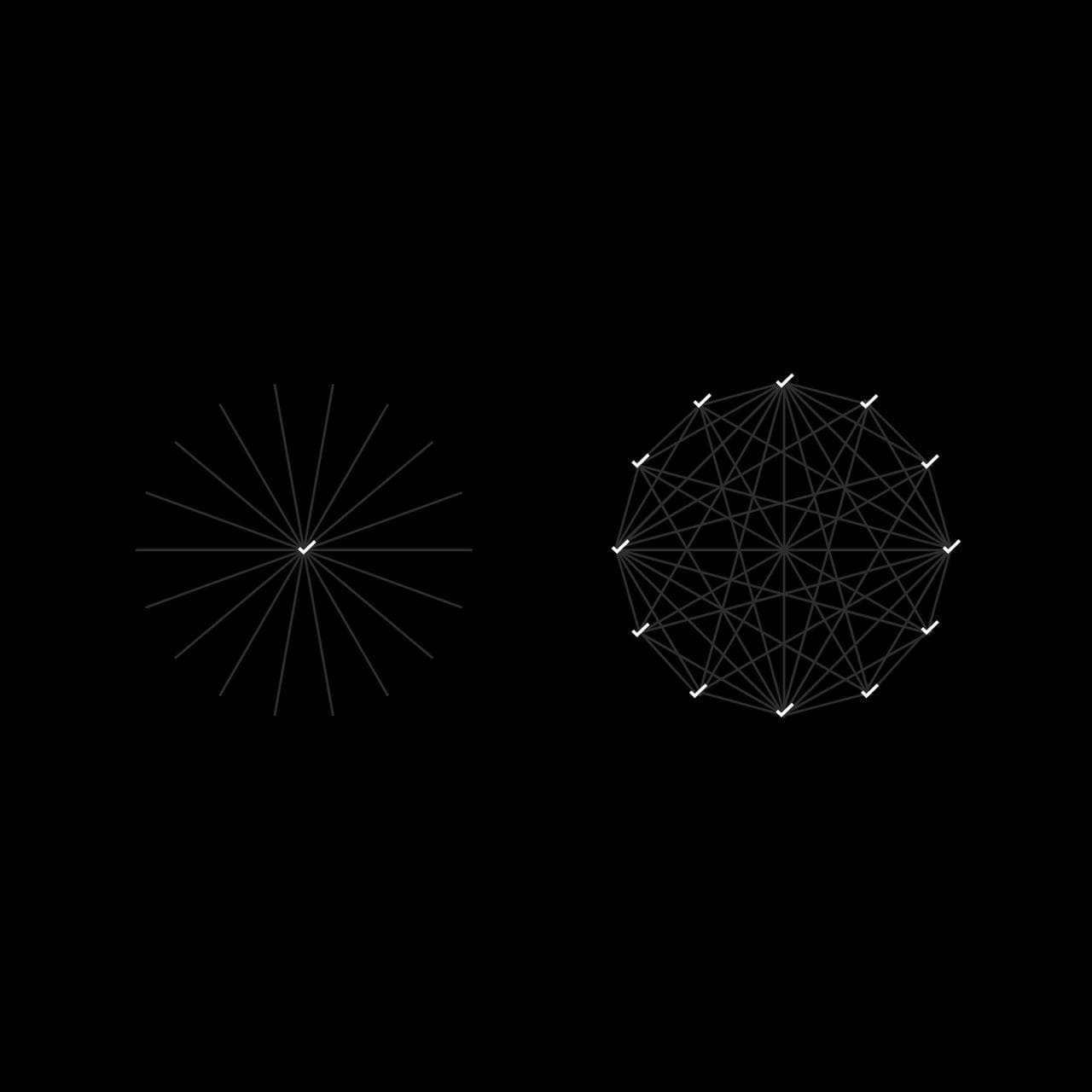
Centralization vs Decentralization
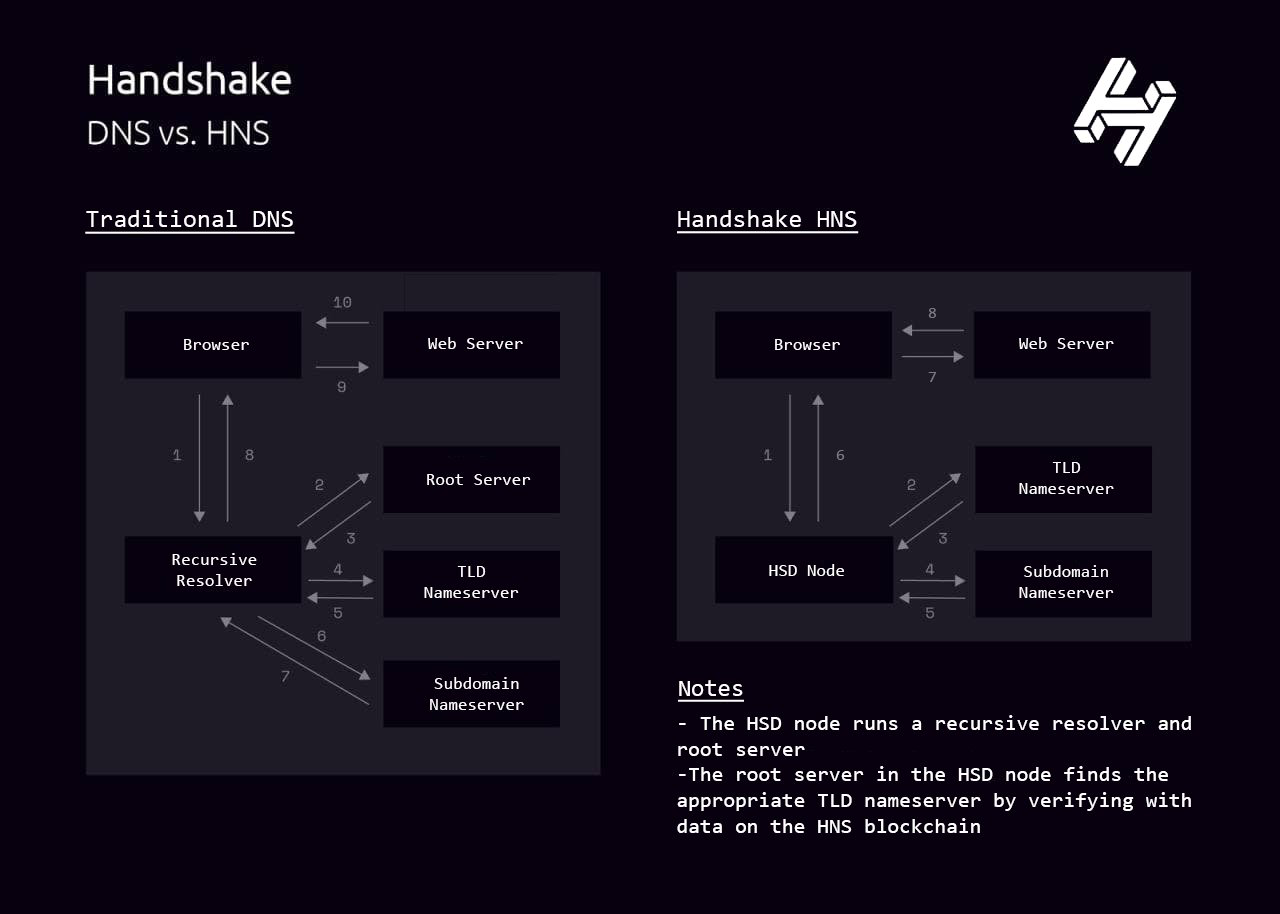
Traditional DNS relies on centralized authorities (ICANN, registrars) while Handshake creates a decentralized root zone managed by blockchain consensus.
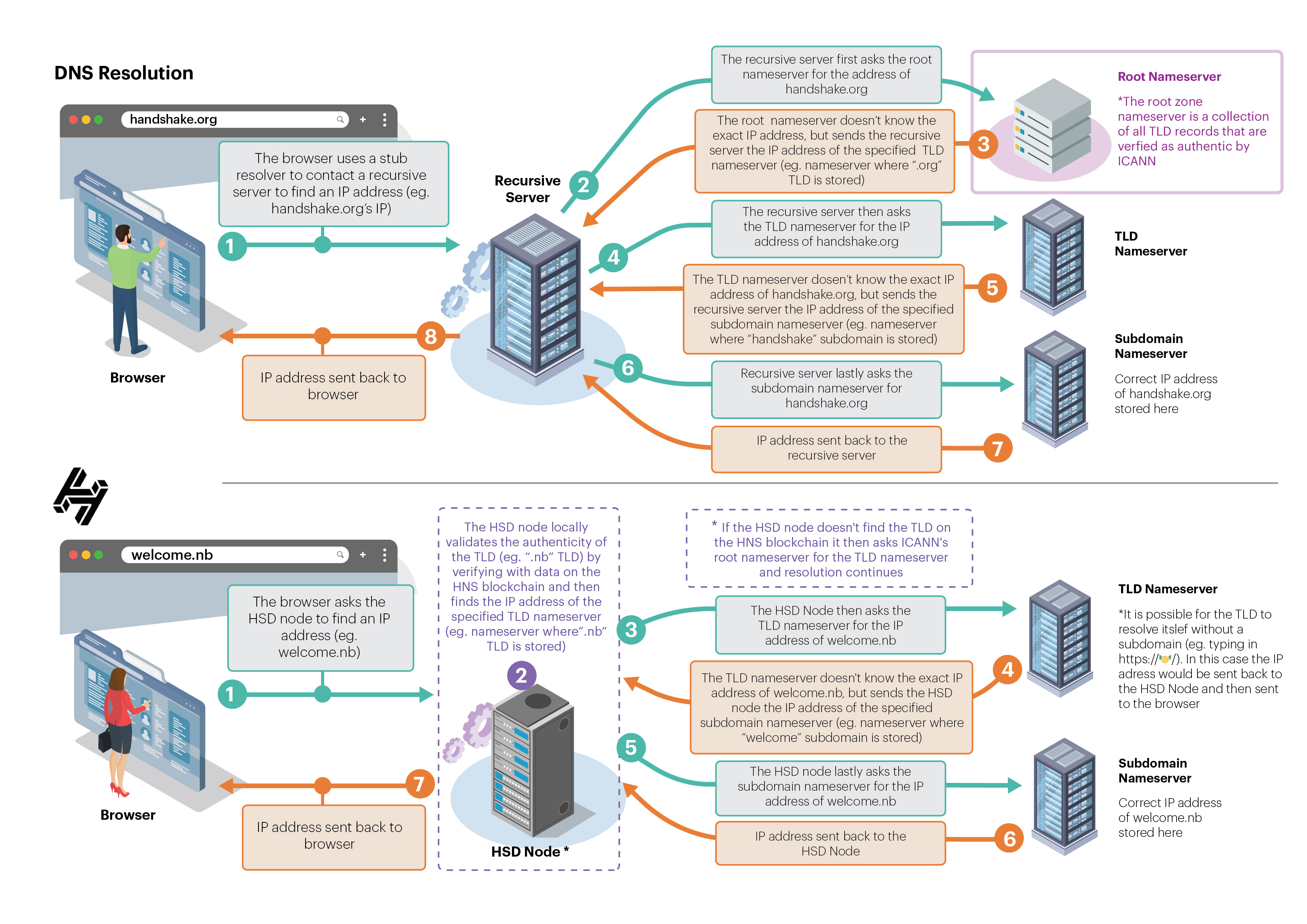
The Domain Name System is the internet's address book — translating human-readable names into IP addresses. Here's how the traditional model works, and how Handshake rebuilds the root.
Click any diagram to open the full-resolution image.
Traditional DNS relies on centralized authorities (ICANN, registrars) while Handshake creates a decentralized root zone managed by blockchain consensus.
DNS uses DNSSEC for security, while Handshake leverages blockchain technology and cryptographic proofs for enhanced security.
Traditional domains are rented through registrars, while Handshake names are truly owned through blockchain-based assets.
Configure your system to resolve Handshake names.
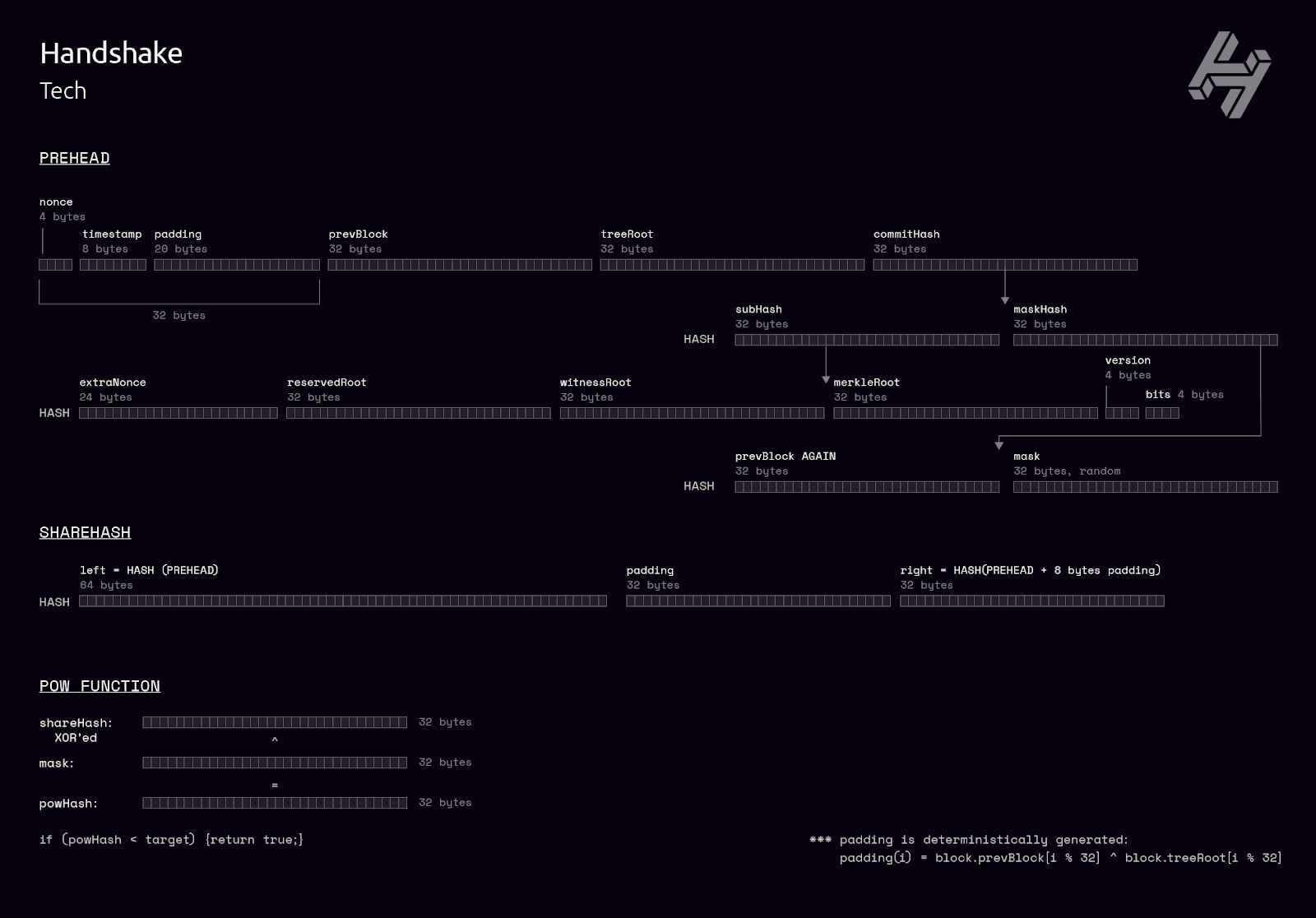
Understanding the technical aspects of Handshake DNS.
A reusable community runbook for testing proposed seed updates and reporting review evidence.
Open validation guide →The complete reference for Handshake DNS resource record types.
Read guide →Source-level walkthrough of the HSD DNS server.
View source →Learn more about DNS and Handshake.